Never have I seen such a multitude of motorcycles in my life. They’re everywhere! Here, people just refer to them as Motos. Someone told me when their parents were visiting, their Dad was like, there are motorcycle gangs here hanging all about. Nope, it’s such a prevalent number of people riding around on motorcycles, he assumed it was moto gangs. Obviously, because of their relatively cheap price in comparison to cars their more economical but, their fixture in Cartagena culture is my assumption as to why such a plethora are on the road.
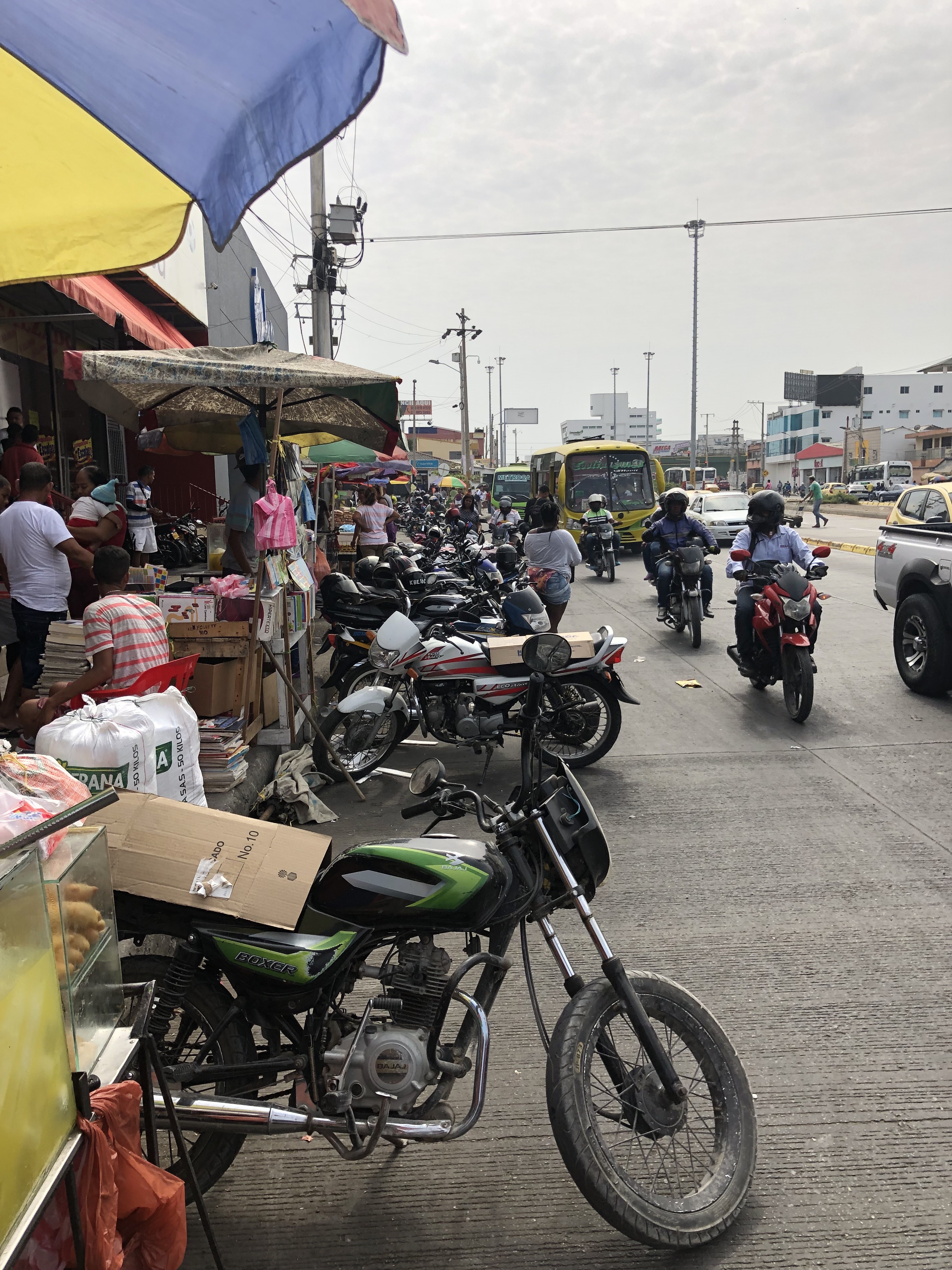
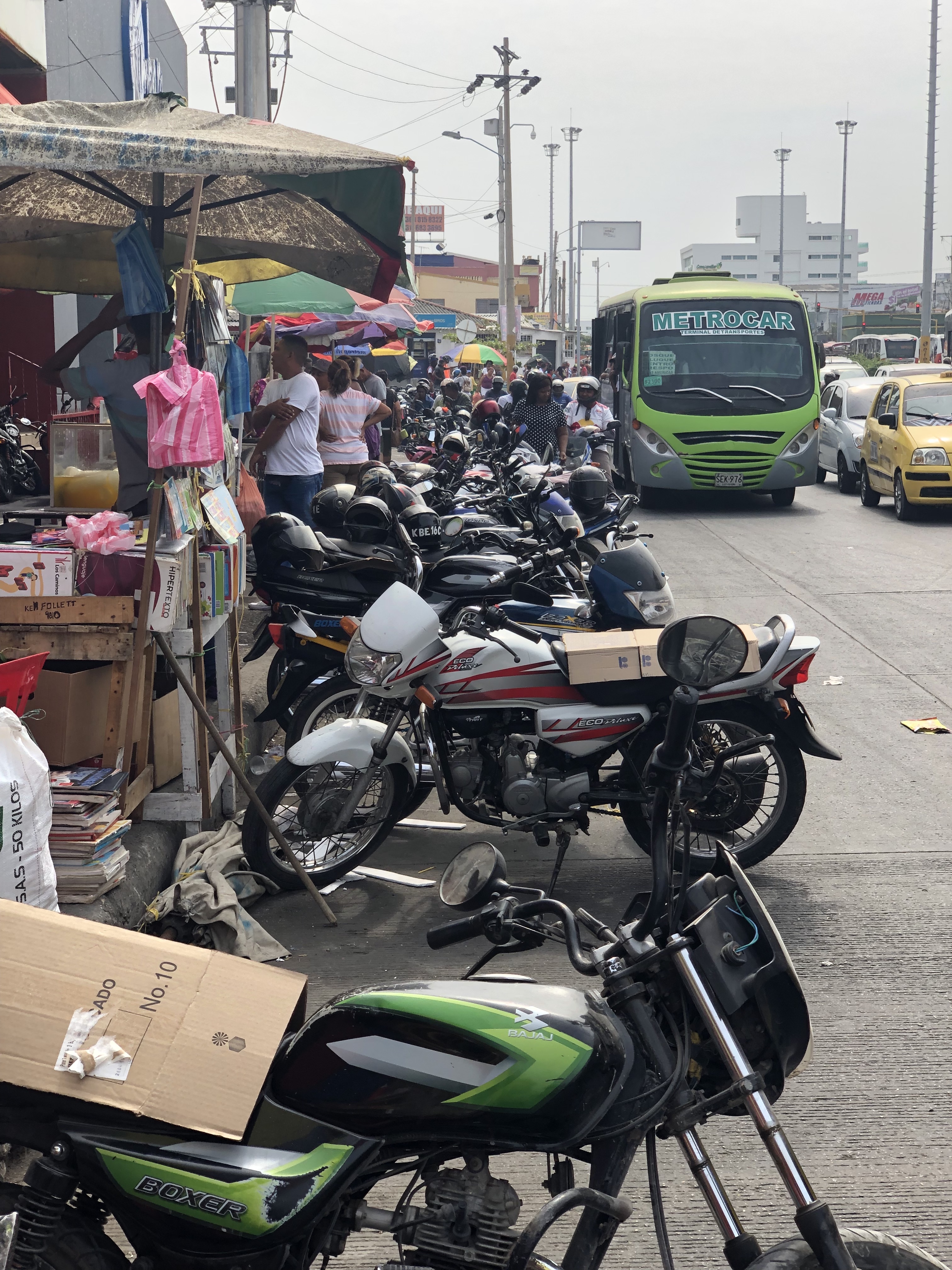
Another aspect of the culture is commuters using Motos as a mode of transportation. If you spot a Moto you’ll more than likely spot the driver with a second helmet wrapped around his arm; a clear sign he’s there to traffic someone to their desired destination. What I don’t know is, if people obtain motorcycles to utilize them as income or they happen to have a motorcycle, utilizing it for all it can provide. My guess is it’s a combination of the two. The price for Moto is $2.500-$3.000 COP. Far faster than buses; both cheaper and faster than taxis. I took a Moto only once to save some time and money. I think it was the first time I’ve ridden on a motorcycle ever. It was uneventful and disappointing because he dropped me off right outside Manga. I was unclear as to why because he was muttering something in Spanish and what a surprise, I had no clue as to what. I thought he was opposed out of personal preference but I later learned they’re not allowed in Manga. Who knew…? Definitely, a fairly unsafe mode of transportation here with the kind of driving occurring. (Update: When I originally drafted this, I had only ridden a Moto once. Today I took one for the second time because I was pressed for time after leaving mi clase de violin and needed to get to El Centro ASAP. I was meeting with a native Spanish speaker so we could practice her English and my Spanish with one another. Normally, I take the Transcribe (see below) after my class to El Centro but that nor a taxi would not have provided the expedited transportation needed. Nosotros llegamos allá muy rápido).
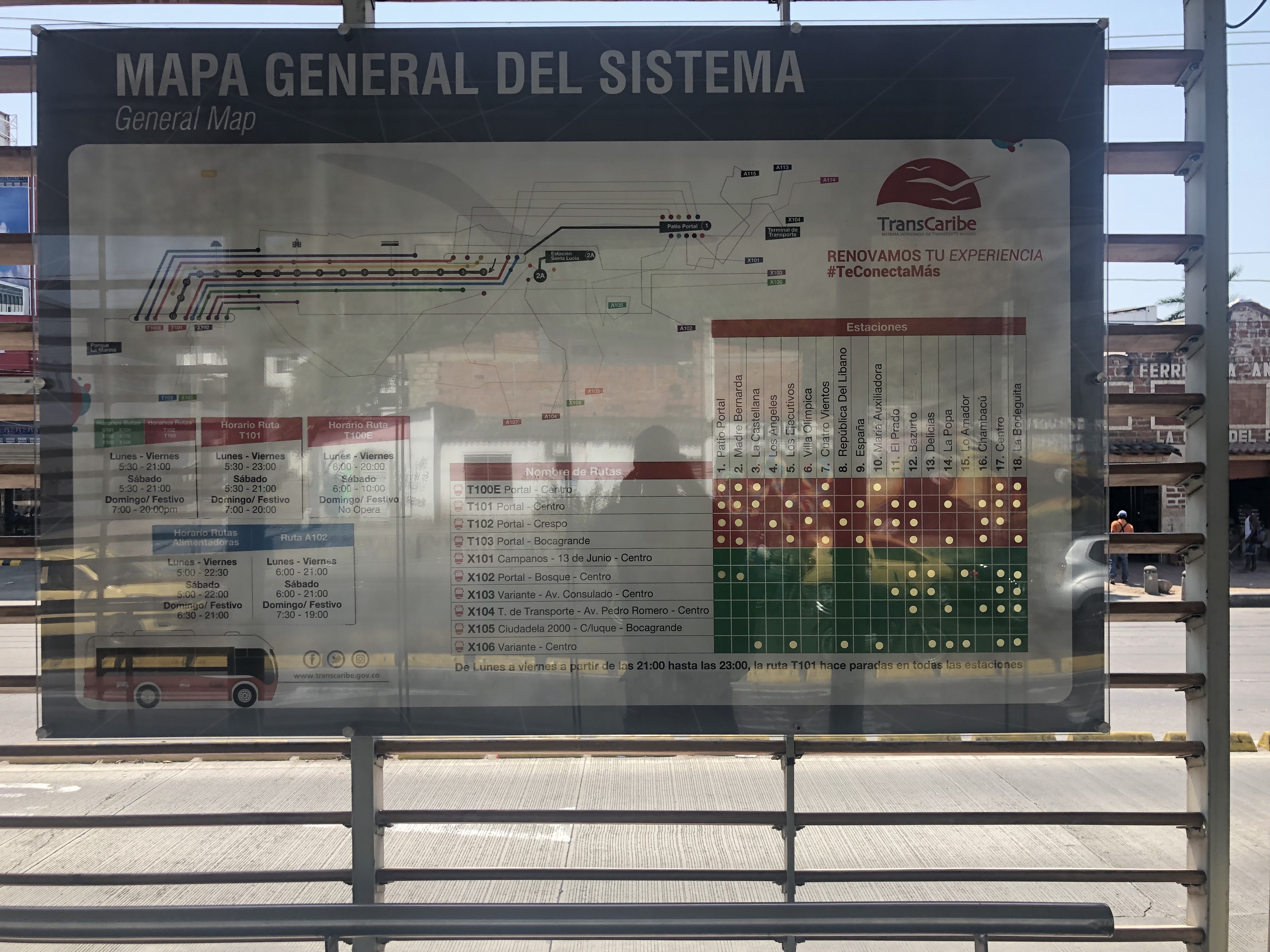
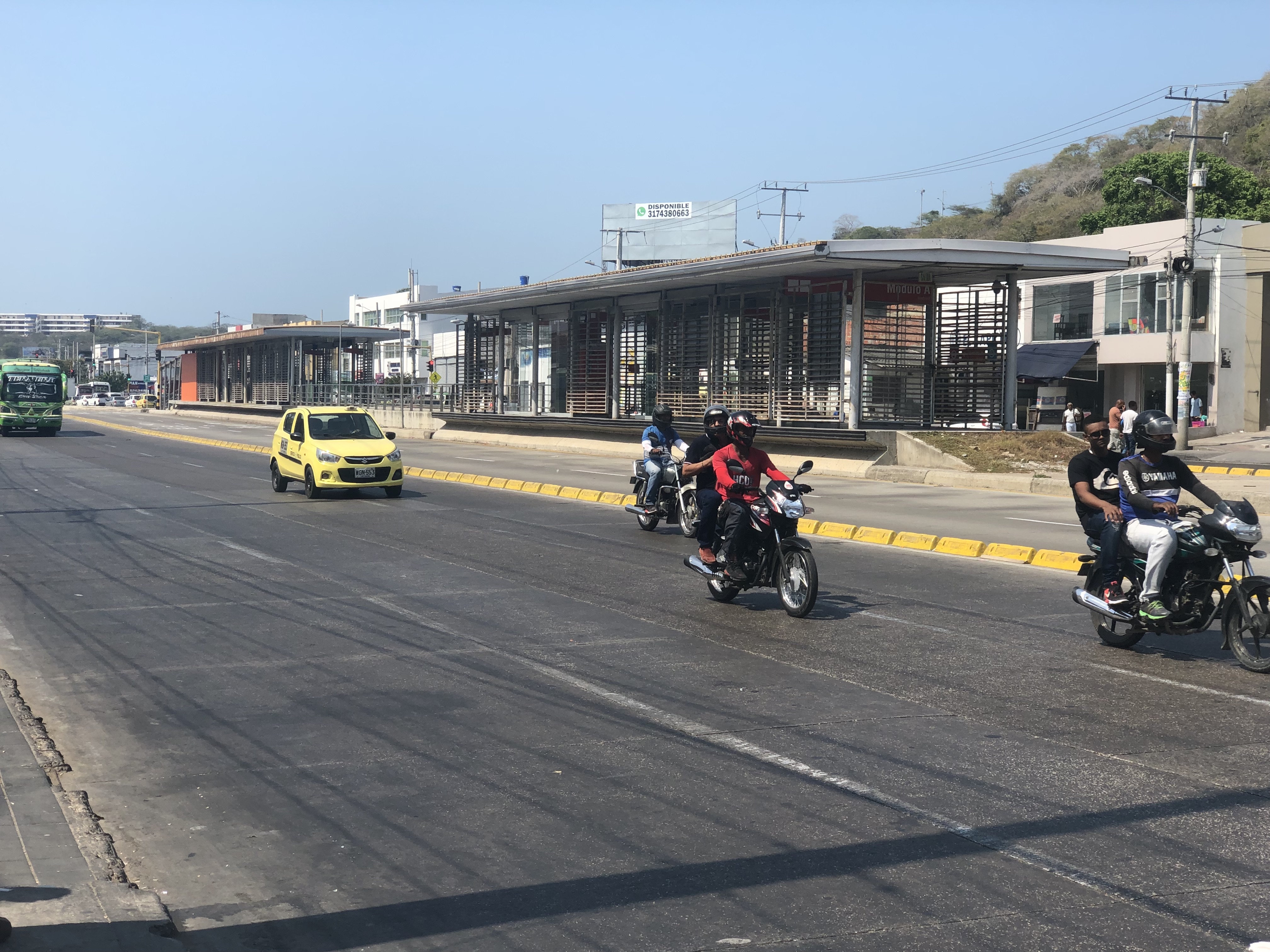
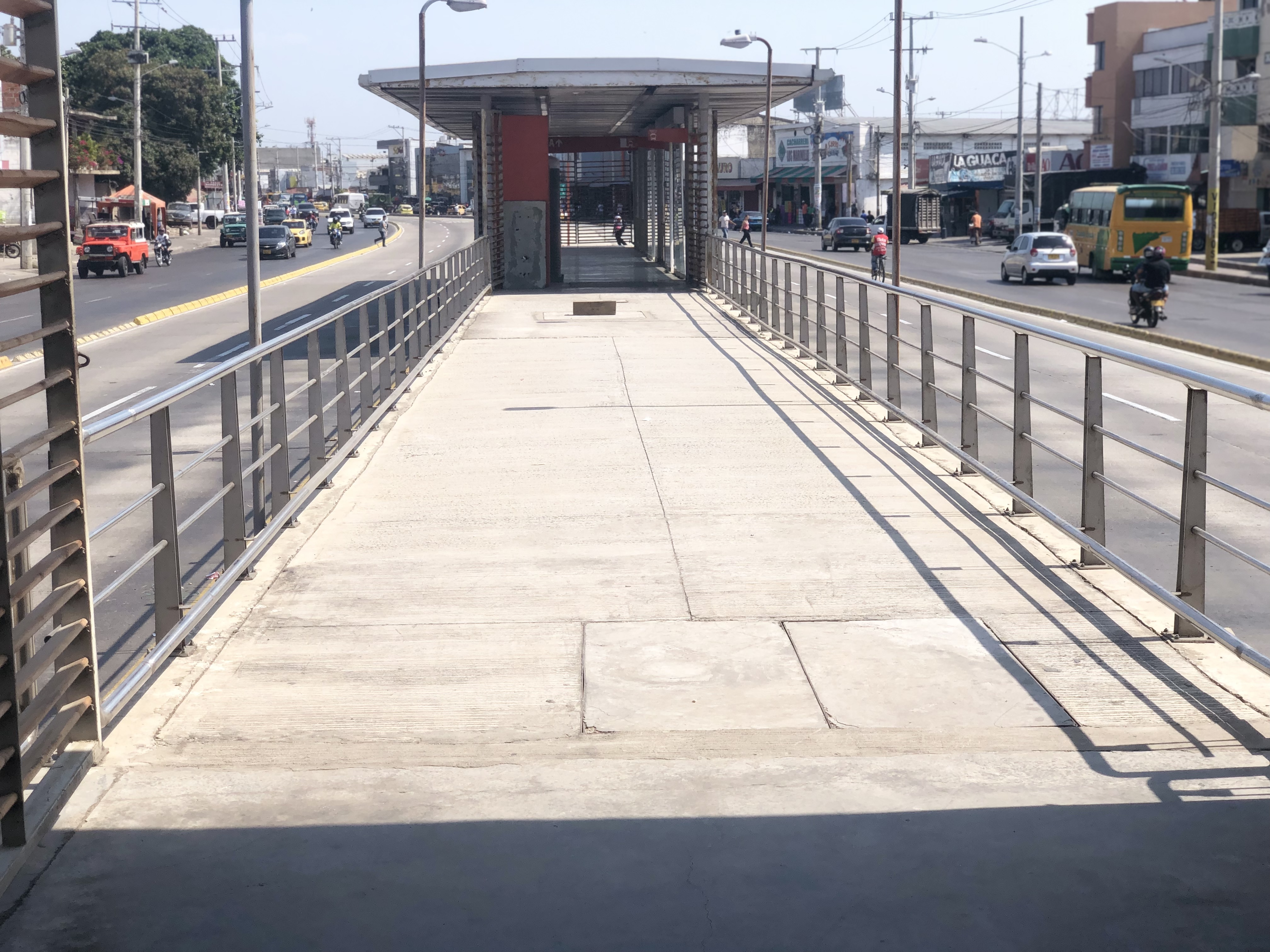
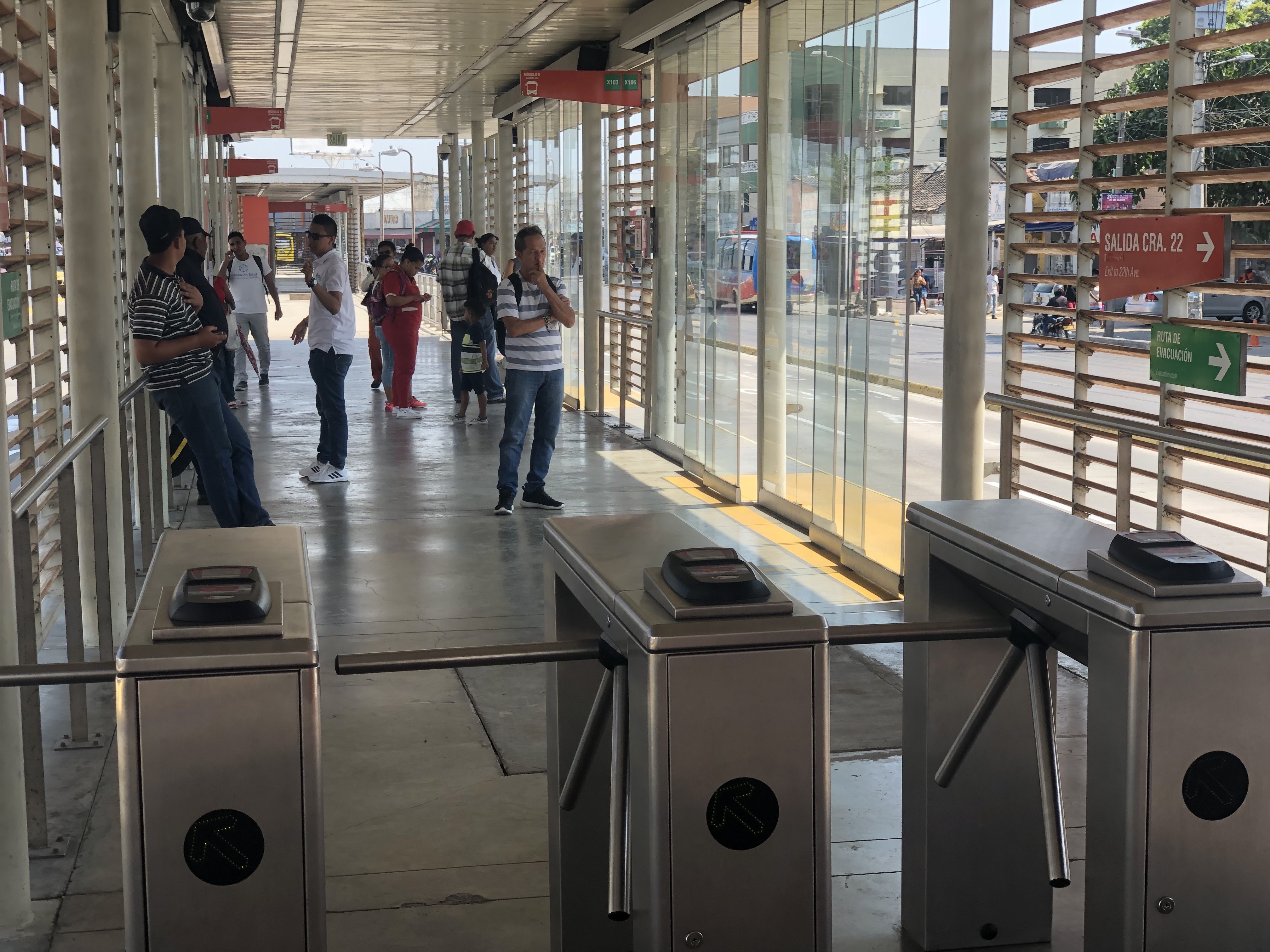
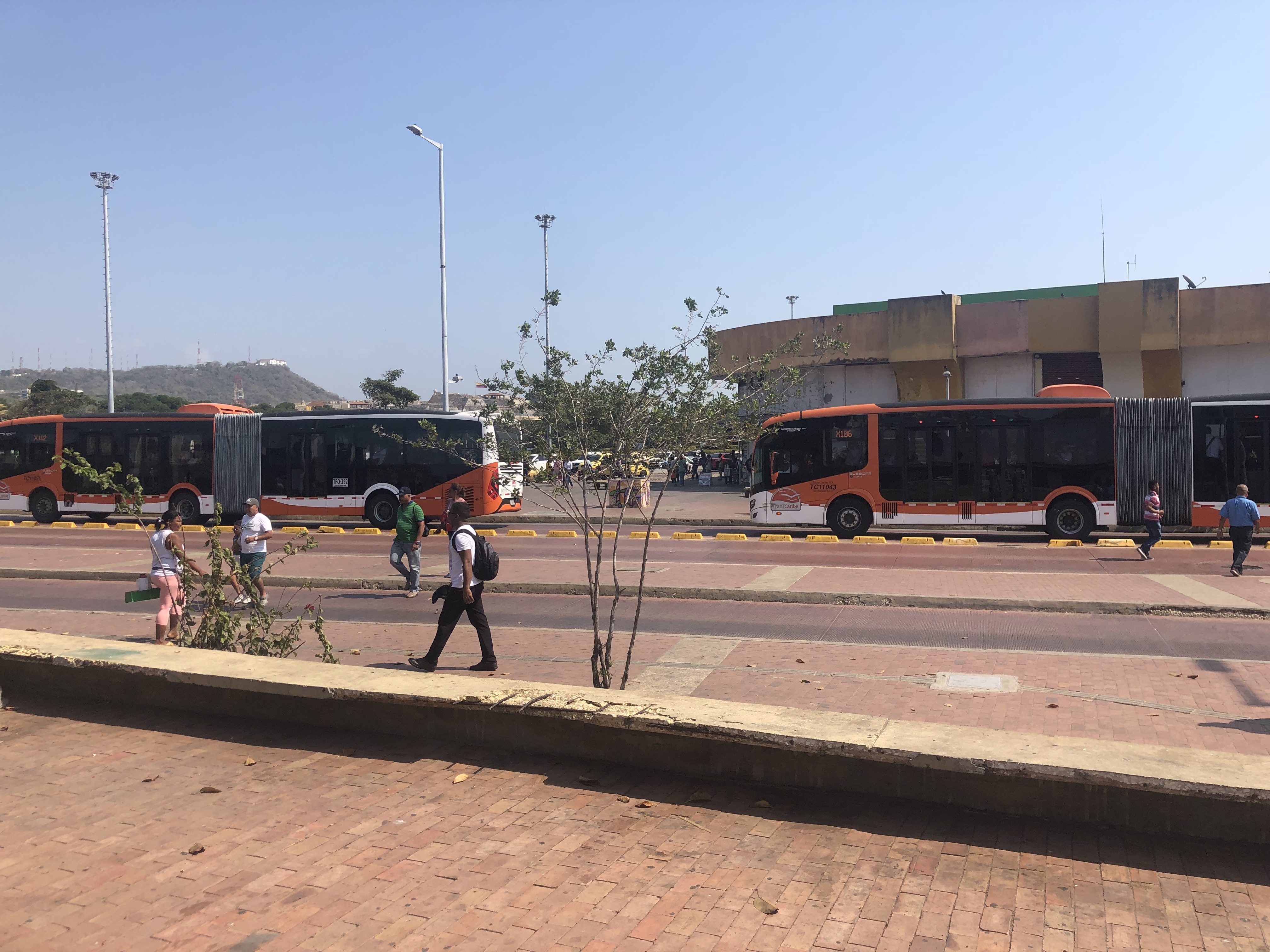
Another major mode of transportation is the Transcribe buses. The only public transportation system. I was lucky to ride a Transcribe my second day here because I quickly learned they existed, how they operated and their usefulness. You enter the stop/station with a bus card via a turnstile. Each time a person enters the turnstile, $2.500 COP is deducted from your card. The Transcribes feel like a train to me. 1. Most of the stops aren’t the typical bus stops we are used to in the States. 2. When riding, you don’t have a clear view of your surroundings nor bearings. At least that’s how I perceive it. 3. They have their own specified lane to maneuver around town. They’re very clean and the only con is how cramped I am during “rush hour”. Without a doubt the safest way to travel around in Cartagena. More on that later.
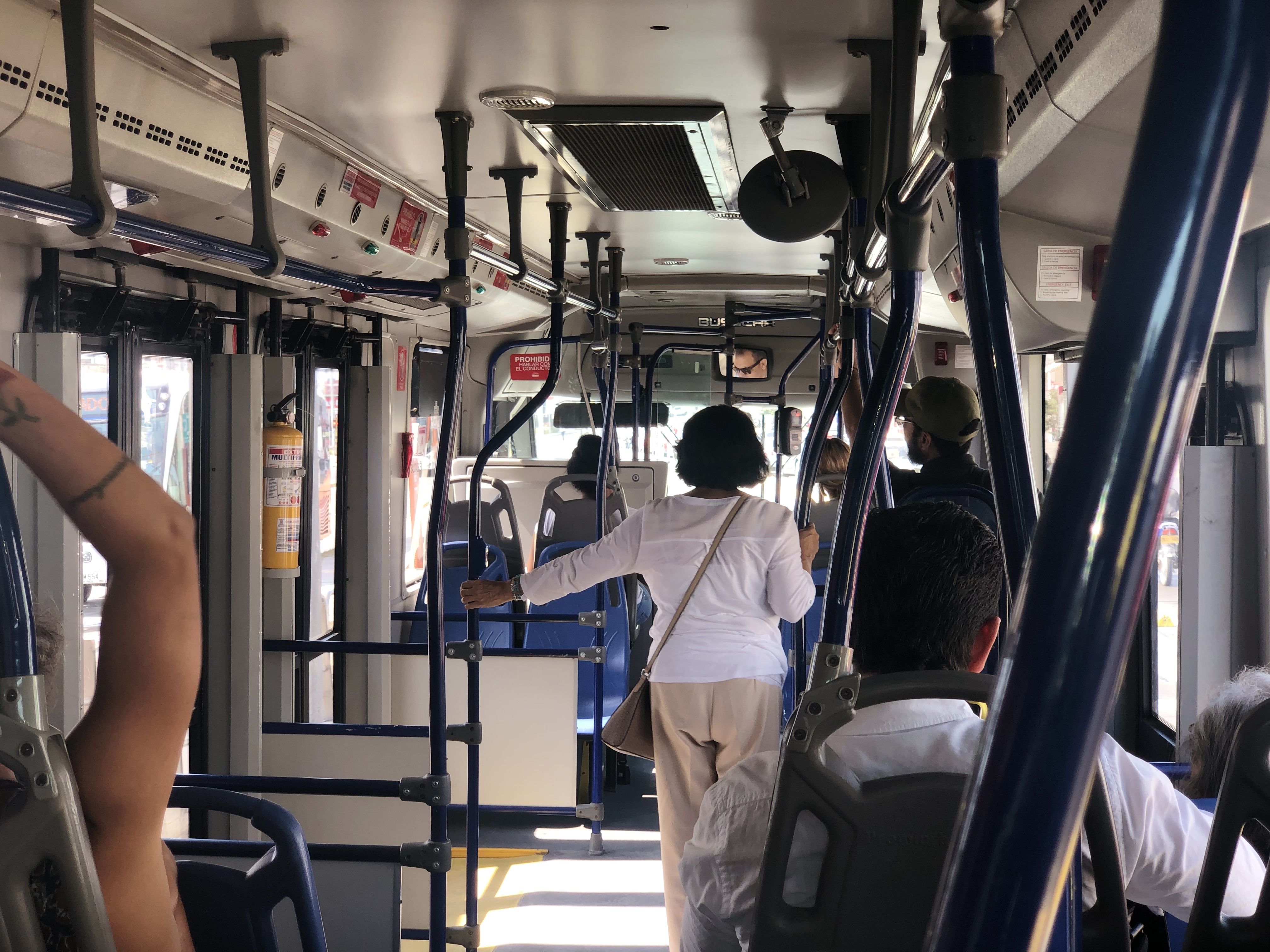
There’s another bus “system” for lack of a better word in town. Don’t know what they’re called. From my understanding, these buses are owned by something or someone with the drivers paying to drive the buses. They make their money back by how many commuters ride their route. These buses come in a variety of colors and shapes. They’re normally very crowded. It’s not unusually to see a guy standing out the door screaming stuff in Spanish while they periodically jump off to hustle people on the bus. I think they’re announcing the bus’s various stops. This is the sort of bus I take to La Boquilla for $2.300 COP minus the wrangler. The only time I’ve taken this bus type. They add to the chaos on the street but safe.
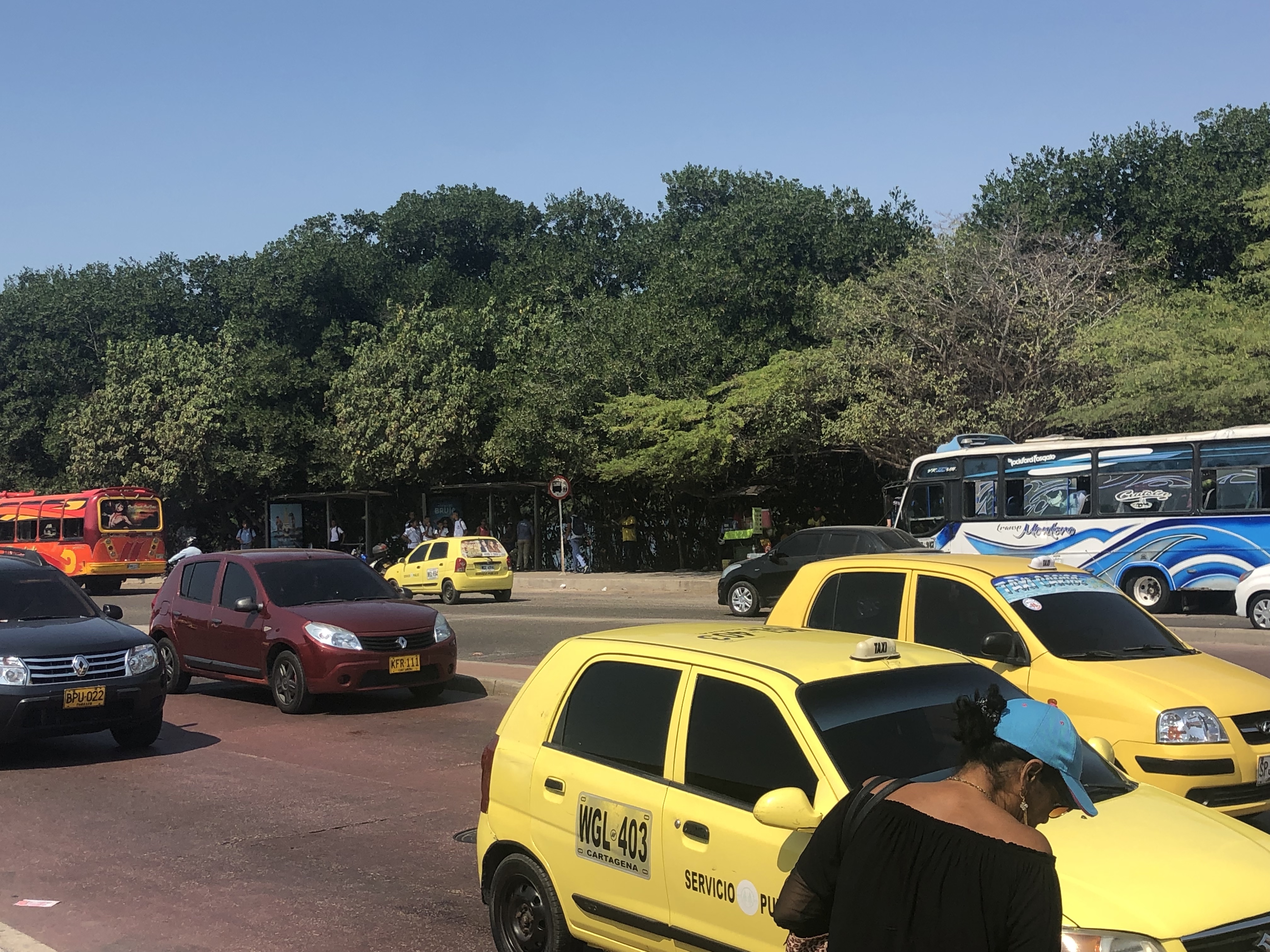
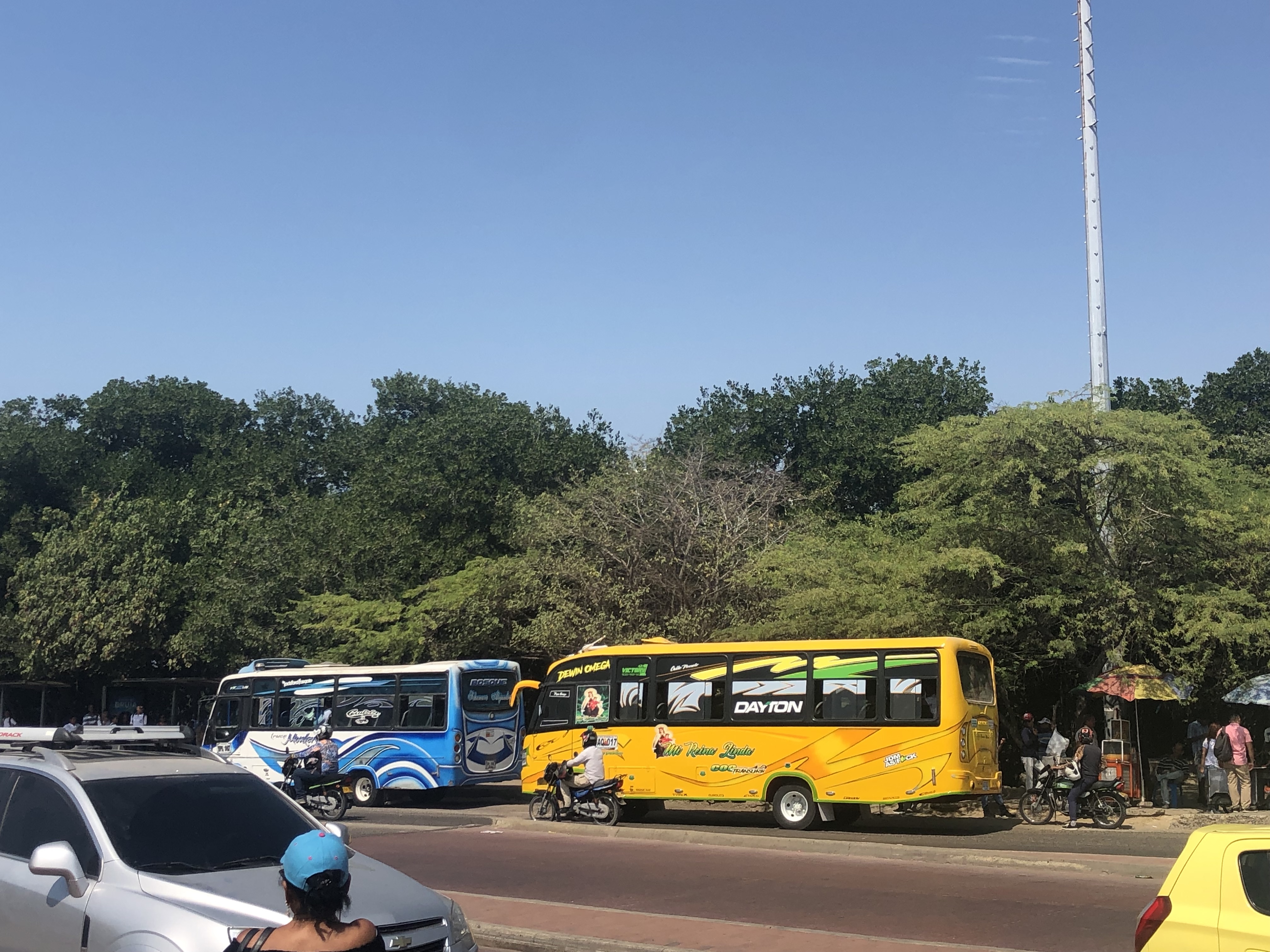
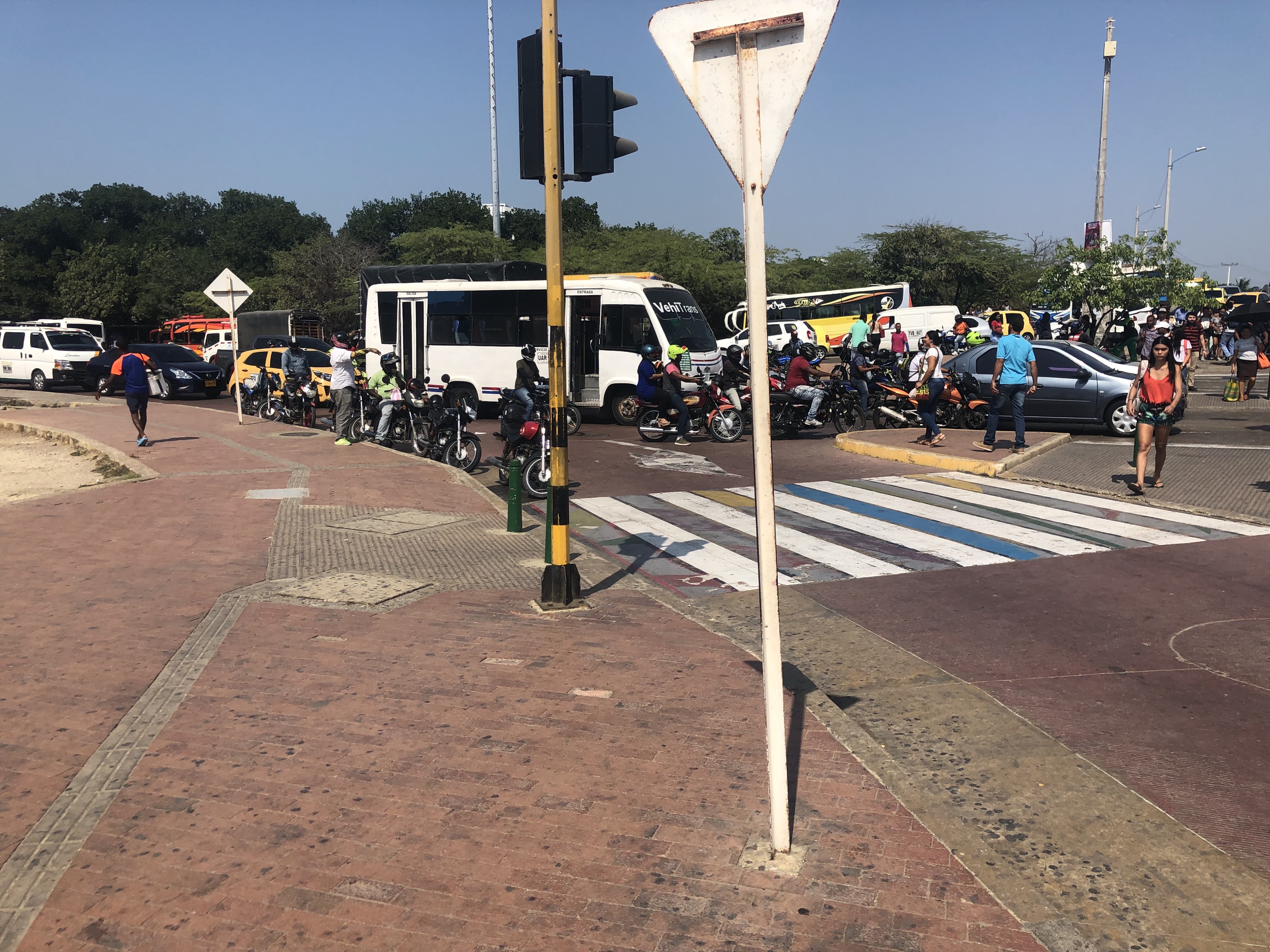
Next, are the taxis. Which like the motos they’re also ubiquitous. You never e be waiting long for a taxi. Normally, a taxi ride is an easy $8.000 COP to wherever you’re going unless it’s a little further than normal. You can sometimes talk the driver down to $7.000 COP. One thing I’ve noticed is some drivers don’t have the skill to read maps. For instance, on a couple of occasions I’ve tried to show a taxi driver where I was going on Google Maps but based on our location which is pinpointed on the map and the arrow, they couldn’t ascertain where it was. They say something like, “Tu vas Bocagrande?” but the map is clearly pinpointing to another area entirely. I was like HUH?!?! Even I know that’s not correct. It would be like being in DuPont, looking at Google Maps and saying, you’re going to Georgetown but the map shows Columbia Heights. I assumed since everyone has a cell phone, they use maps and they’re a taxi driver for Pete’s sakes. Having this experience a few times I concluded some taxi drivers do n’t know how to read maps, but I also try not to be judgmental about it. Total different culture and learning system. Besides I’m the foreigner who can’t clearly speak their language to articulate where I need to go. The taxis are obviously safer than Motos but with the traffic and driving down here… could be safer.
When I don’t feel like walking back to Manga but don’t want to pay $8.000 COP for a private taxi jump in a Colectivo. Colectivos are shared taxis for four people heading to the same general area. Think of it as a less formal Uber Pool. Manga has a dedicated area in El Centro where the taxis lineup and shuttle people to Manga. The cost is $2.3000. I read in an article (translated from Spanish) this specific system from El Centro to Manga was configured for Manga residents because Manga lacks a bus route unlike other areas in Cartagena. The Colectivos have no designated drop off stop in Magna. When approaching to your destination, you tell the driver or like me, just say aqui. To take a Colectivo from Manga to El Centro I just walk two blocks to Calle 26 (that’s street 26 for the non-Spanish speakers) and wave man hand to a passing taxi going in that direction. When one stops, I ask if he’s a Colectivo, if so, I can hop in and he’ll take me to El Centro for $2.300. Colectivos go to other areas but I’ve only done it for Magna. Safety: see the previous paragraph on taxis.
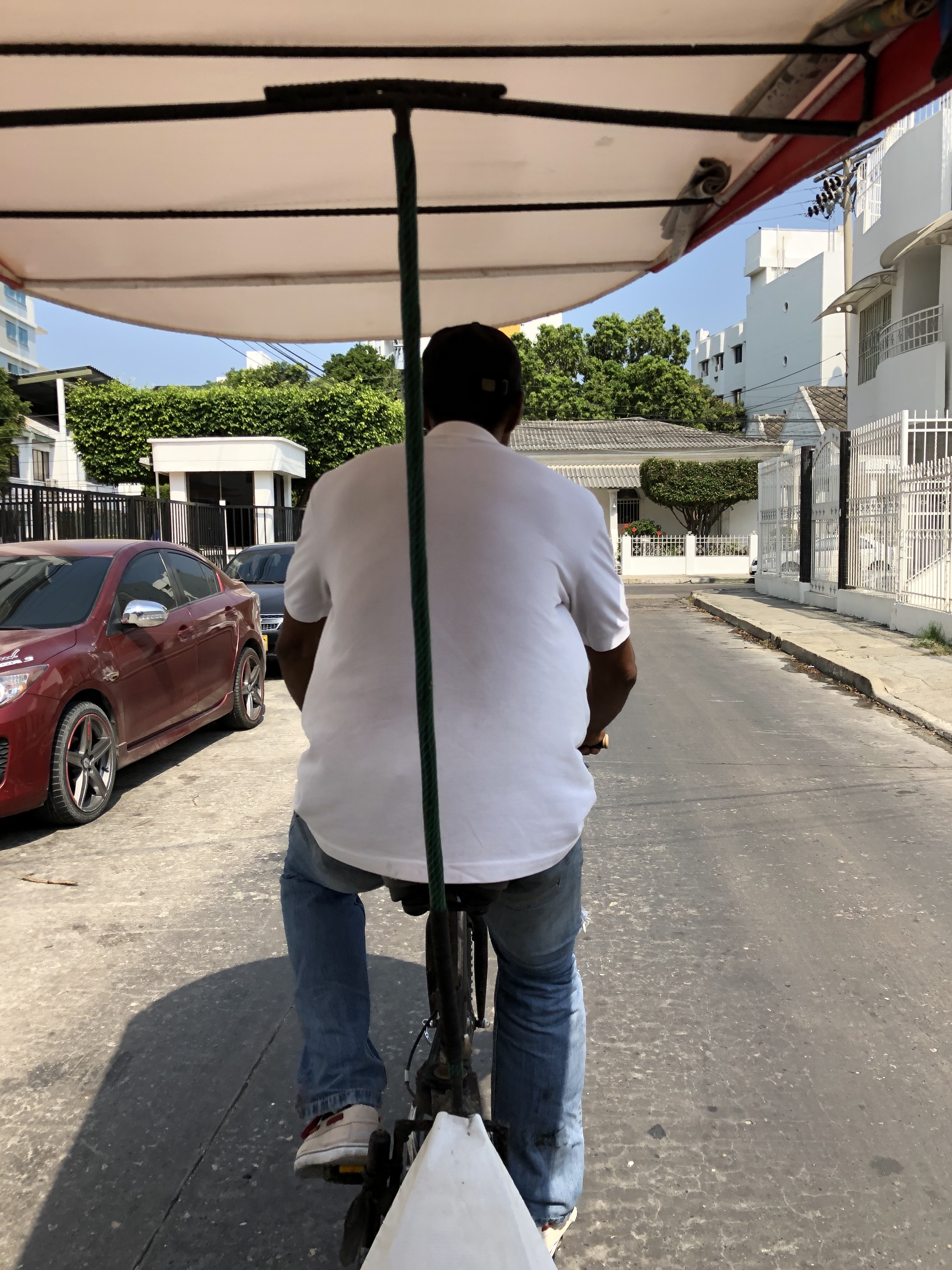
Finally, there’s walking. I can’t believe I’ve done so much walking over the last few weeks. El Centro isn’t too far and walking back from El Centro is something I’ve become accustomed to. It’s usually later when the suns went down, thereby, much cooler (obvi). Normally walking this much proves problematic because of my chronic knee condition, however, my therapeutic rehab exercises and special gels have helped make it a lot more manageable. I’m very thankful for this because it allows me to slow down, take more in and think. I also do a lot of walking in and around Magna. This morning I walked to the barbershop, which was a quick 15-20 minutes but took a ride with a guy who rides a bike and a carriage attached (yeah sorry can’t remember what those are called) for $2.3000 COP on the way back because I was pressed for time (and it was very hot). Walking is safe, so as long as you’re not around traffic. Scratch that. As long as you’re not anywhere near a car period.
Living in DC Proper for the live six and half years but more specifically Colombia Heights, not much adjustment was needed to get around. Essentially, it’s the same; Walking, Ubers/Taxis, Buses, and Metro (let’s call the Transcribe the Metro). I didn’t skip a beat. A few people I talked to said it took time to adapt to the commuting in Cartagena. The only difference for me is, it’s much hotter when walking and a more chaotic on the road.
Speaking of which. I’m very surprised I haven’t witnessed an accident on the road. Be it a car on car, car on motto, motto on bus or all of the above on a pedestrian. “The pedestrian has the ride away” is nonexistent here. You have to make your way. Taxis, mottos run red lights with abandon. Not all the time but a lot. I’ve been in a taxi a few times like, wait what?, he just ran the light like it was nothing. Sadly, I’ve almost become normalized to it. There just isn’t much order to the driving. A least not to my American eyes. There is persistent honking for sometimes I’m not sure what. A driver might honk for an infraction he himself, just committed prior or maybe immediately after hoking. You see this behavior at home but it’s allllll the time here … somethings just take getting used to and I’m trying. They just honk honk and honk…. But, I try to remember, it’s a different culture, with its set of indoctrinated unconscious habits, beliefs and reality. Just like ours!

 Live. Laugh. Love. Travel.